[Making Intelligence] Obstacle Six // Egg Roll


Project Brief

"Design and build a structure that moves an egg down a 42-inch change in elevation."


Tools and Materials Used

Chipboard
Acrylic
MDF
Screws
Hand drill
Hot glue


1) Process

I first tested the limits of the egg, and learned quickly that there was not much leniency to how far the egg could drop.
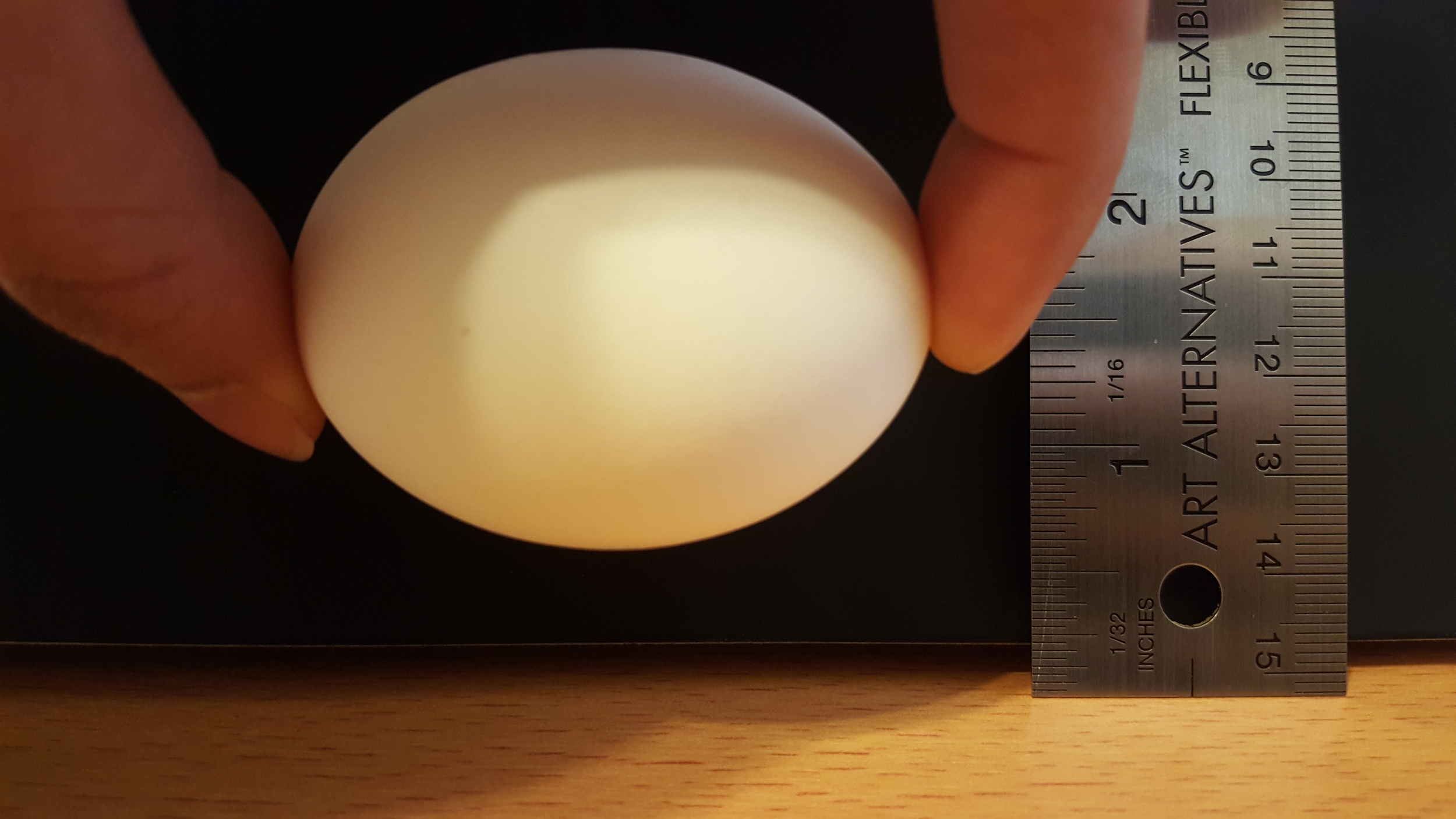
Egg remained intact at a 1/2" drop.

Egg remained intact at a 1/2" drop.

Egg easily cracked when dropped at a height of 2".

Egg easily cracked when dropped at a height of 2".

I sketched through a few quick ideas, but I limited myself to a compact and modular design to be most efficient in making and assembling the egg roll structure together. I created a detailed three-dimensional digital model of the design as a basis to fabricate the actual design.

A series of ladders with rungs were offset by approximately 1/2" for the egg to drop onto at every platform. When transitioning from the digital model to the making the actual model, I added half walls to the platforms to ensure the safety of the egg.

Although the idea of having the same shape of the platform repeated throughout the structure was appealing, the small differences and human error forced me to customize each platform. Each platform was measured and cut on the spot to accommodate the differences.

2) Assembly

3) Testing

The final product has about a 50% success rate, which is partially dependent on the speed and orientation of the egg's release, and partially luck-based.

Zappos Design Challenge // ETA


Zappos presented its internship applicants with a design challenge as part of its application process. I named my design ETA, or Estimated Time of Arrival, in response to the given prompt.


Design Prompt


"You're travelling from Las Vegas to New York City in mid-January. You've just landed in Chicago for a 3-hour layover. Unfortunately, an hour before your flight is supposed to leave, a massive snowstorm blows into the area, stranding you and all the other passengers in Chicago for at least a day! Bummer! Your challenge is to design an app that will help future travelers in a similar situation."


2) The Problem

All of these solutions are standalone phone applications. You have to open Hotel Tonight to book and to check your reservation information; you need to open up a browser or airline app to check your next flight; you search up restaurants through Yelp; you browse through lists of website links so you can find something to do for the next six hours or so; then you forget when your hotel check-in time was so you open up Hotel Tonight again to check the information... The problem is these apps are meant for completing their respective tasks. ETA is your dashboard, your virtual home base, for all things related to being stranded at the airport away from your home city.


1) Existing Solutions

There are existing solutions in this problem space, and every step of the way, from transportation to accommodations to entertainment, you already have so many options to choose from. For example, your accommodation needs can be met by using Hotel Tonight, AirBnB, or simply walking into any hotel. Transportation to the accommodation is easily done through taxis, Uber, public transit, or hotel shuttles. Restaurants and eateries can be found through Google Maps or Yelp. Entertainment or tourist attractions can be searched through Google or TripAdvisor. All these services and apps are good at what they do, so why reinvent the wheel when you can use that wheel to build a car? When you are stranded at the airport equipped with one of the most powerful tools possible today, the smartphone, not many things are impossible. So, then, what is the problem to solve?


3) The Solution

ETA displays your flight information, and helps you find the right accommodation, transportation method, entertainment choices, and grubbing hotspots with your personal preferences and price range. This is the app to go to when stranded, or exploring, a new city for a short period of time. Each part of this app (accommodation, transportation, entertainment, and restaurants) maximizes the use of existing applications, and ETA is the thread bringing each piece together onto one platform for a seamless “stranded” experience. Why not take full advantage of this unexpected opportunity to explore a city?

Wireframes

Menu

Most people would have their mobile devices on them while traveling. Therefore, the most logical platform to target is smartphones such as iPhones or Androids. Phones are also much more accessible and easy to use while on-the-go compared to tablets or laptops.

Flight Info

Basic flight information is updated and displayed under “Flight Information.” Changes in flight information will alert the user of updated flight info, and direct the user to change hotel and other items accordingly.
 

Hotel Reservation

ETA remembers your previous choices and preferences to sort more relevant results to the top of the list. ETA also already knows how many nights and for which dates you need to book, and automatically generates that information for fast and hassle-free booking.

Alert Popup

The user is alerted when there are flight updates. In this example, the flight is delayed further, and the user is asked to extend the hotel stay, or dismiss this alert and maintain current hotel reservations as is.

[Making Intelligence] Obstacle Five // POPsegrity


Project Brief

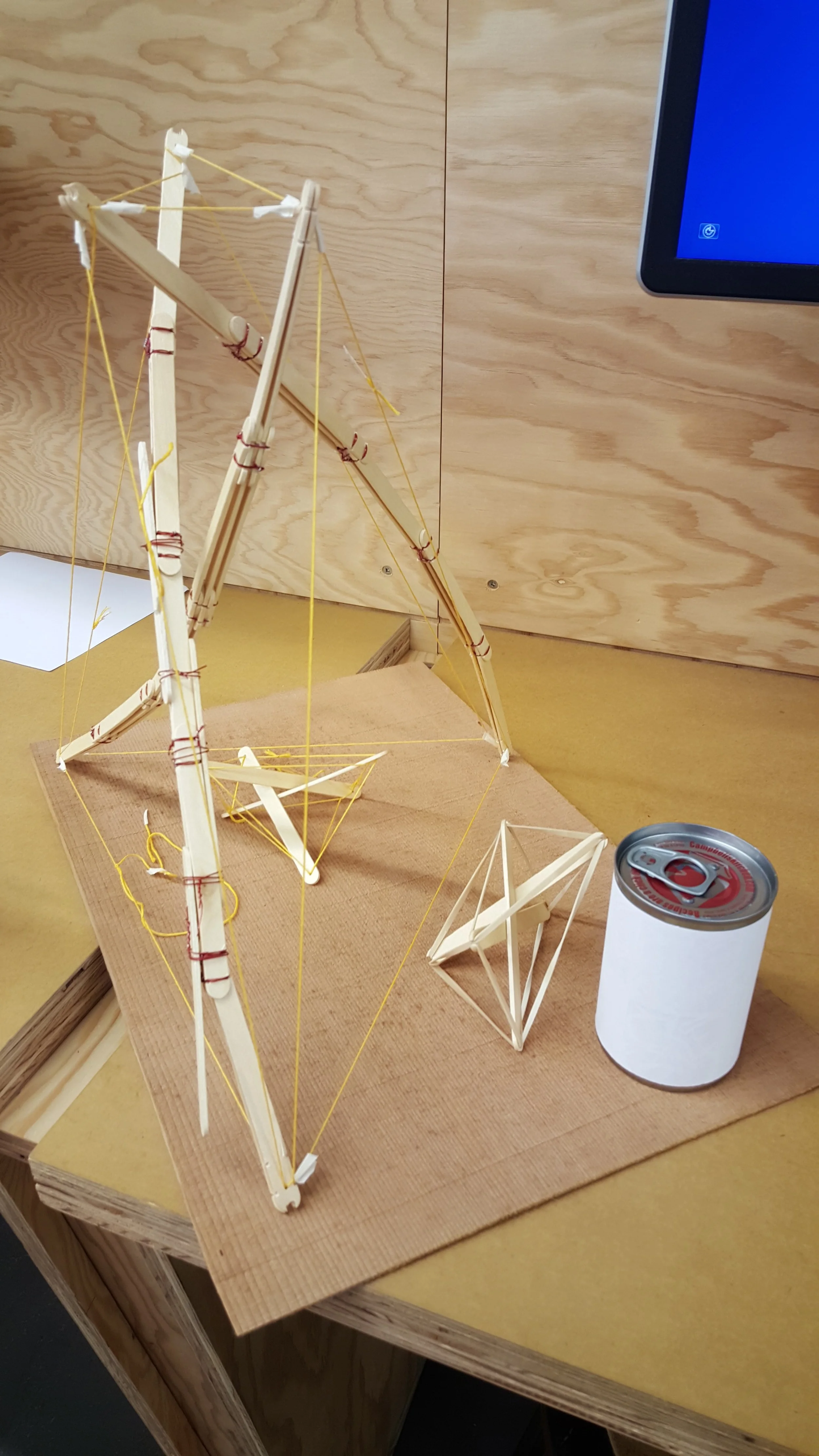
"Develop a tensegrity structure, and hold up a can of soup 10 inches above a horizontal surface."


Tools and Materials Used

Popsicle sticks
Rubber bands
Strings
Wire


1) Structural Study

I approached this obstacle by studying the tensegrity structure in hopes of discovering opportunities to modify or add to the basic form to create an innovative method of aggregating tensegrity structures.

There were many failures in attempting to put together a basic tensegrity structure using rubber bands. Using different materials for the tension member did not make the task any easier either. After many hours of trying new approaches, I came to the conclusion that a pure tensegrity structure would be impossible to achieve given the resources, time constraints, and design requirements of suspending a can of soup 10 inches above a surface.

Instead of trying to aggregate tensegrity units in a way where it can support a can of soup, I built a scaled up version of one basic tensegrity structure.


2) Final Product